
Why Digital Marketing Is Essential for Sustainable Business Success
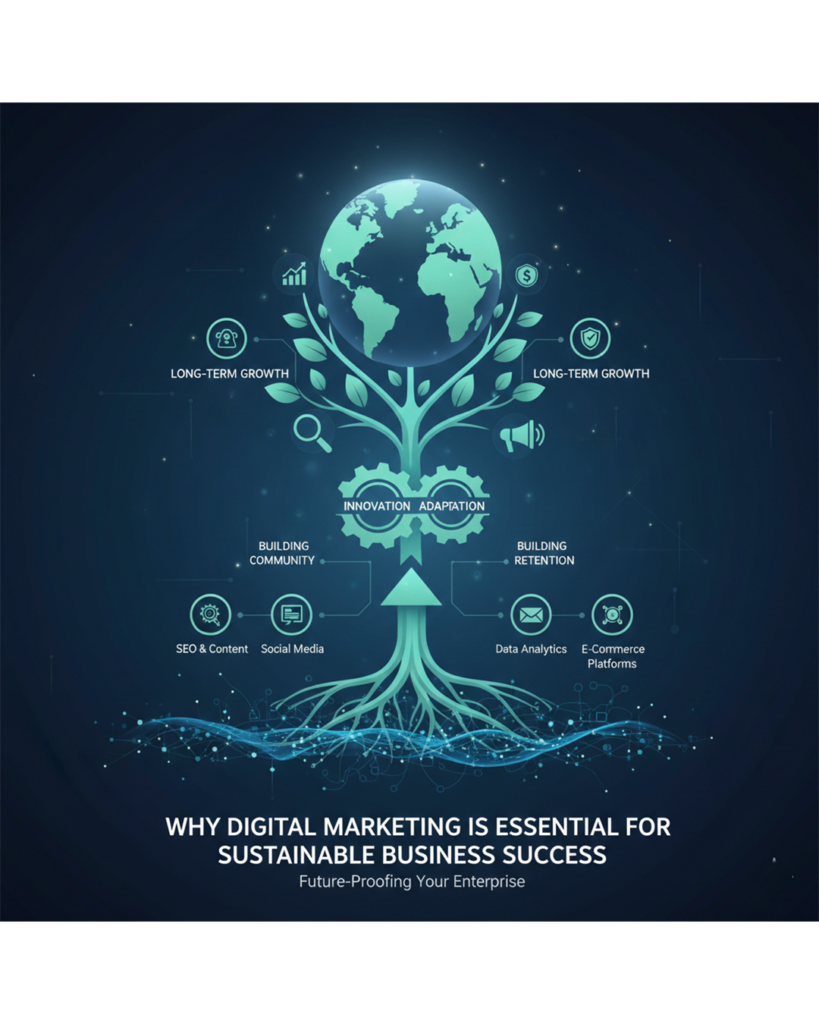
In an increasingly digital world, businesses must evolve to stay relevant, competitive, and profitable. Traditional marketing methods alone are no longer sufficient to meet changing consumer behaviors and expectations. Digital marketing has emerged as a critical component of long-term business growth, helping brands build visibility, connect with customers, and adapt to market changes. For sustainable business success, digital marketing is not just an option—it is essential.
Expanding Reach and Brand Awareness
One of the primary reasons digital marketing is essential is its ability to reach a wider audience efficiently. Unlike traditional marketing, which is often limited by geography and high costs, digital marketing allows businesses to connect with potential customers across the globe. Through search engines, social media platforms, websites, and email campaigns, brands can consistently maintain an online presence where their audience spends most of their time.
Search Engine Optimization (SEO) plays a key role in increasing brand visibility. By optimizing websites and content for relevant keywords, businesses can appear in search results when customers are actively looking for solutions. This not only drives organic traffic but also builds credibility and trust over time. A strong online presence ensures that a brand remains visible and competitive in a crowded marketplace.
Cost-Effective and Measurable Marketing
Sustainable business growth requires smart investment, and digital marketing offers a cost-effective alternative to traditional advertising. Small and medium-sized businesses, in particular, benefit from digital marketing because it allows them to compete with larger brands without massive budgets. Paid ads, social media promotions, and email marketing campaigns can be scaled based on business goals and budgets.
Another major advantage is measurability. Digital marketing provides access to real-time data and analytics that show exactly how campaigns are performing. Metrics such as website traffic, click-through rates, conversions, and engagement levels help businesses understand what works and what doesn’t. This data-driven approach allows continuous optimization, reducing wasted spending and improving return on investment (ROI).
Building Strong Customer Relationships
Customer engagement is a key factor in long-term success, and digital marketing enables businesses to build meaningful relationships with their audience. Social media platforms allow two-way communication, where customers can interact with brands through comments, messages, and reviews. This interaction creates trust, loyalty, and a sense of connection.
Content marketing further strengthens customer relationships by delivering value rather than direct promotion. Blogs, videos, guides, and social media posts educate and inform customers, positioning the brand as a trusted authority. When businesses consistently provide helpful and relevant content, customers are more likely to engage, return, and recommend the brand to others.
Email marketing also plays a vital role in nurturing customer relationships. Personalized emails, newsletters, and exclusive offers help maintain regular communication and encourage repeat business. By staying connected with customers, businesses can foster loyalty and long-term engagement.
Personalization and Customer-Centric Strategies
Modern consumers expect personalized experiences, and digital marketing makes personalization possible at scale. By analyzing customer data such as browsing behavior, preferences, and purchase history, businesses can deliver targeted messages and customized offers. Personalization improves customer satisfaction and increases the likelihood of conversions.
Digital marketing tools and automation platforms help businesses deliver the right message at the right time. Automated campaigns, retargeting ads, and personalized recommendations ensure consistent engagement throughout the customer journey. A customer-centric approach not only improves short-term results but also supports sustainable growth.
Adapting to Market Changes and Trends
One of the biggest strengths of digital marketing is flexibility. Markets, trends, and customer behaviors change rapidly, and businesses must adapt quickly to survive. Digital marketing strategies can be adjusted in real time, allowing brands to respond to new trends, algorithm updates, or customer demands.
For example, businesses can test different ad creatives, content formats, or targeting options and optimize based on performance. This agility helps brands stay relevant and competitive while minimizing risk. Companies that embrace digital marketing are better equipped to handle disruptions and maintain long-term stability.
Strengthening Brand Trust and Authority
Trust is essential for sustainable success, and digital marketing helps build brand credibility over time. Positive reviews, testimonials, social proof, and consistent online engagement enhance brand reputation. When customers see active social media profiles, informative content, and responsive communication, they are more likely to trust the brand.
Influencer collaborations and user-generated content further strengthen brand authority. By partnering with credible voices and encouraging customers to share their experiences, businesses can build authenticity and long-term trust.
Supporting Long-Term Growth and Sustainability
Sustainable business success is not just about short-term sales—it is about long-term growth, customer loyalty, and adaptability. Digital marketing supports sustainability by creating ongoing engagement, steady lead generation, and continuous brand presence. Unlike one-time campaigns, digital strategies build momentum over time.
Businesses that invest in digital marketing are better positioned to grow consistently, respond to change, and maintain strong customer relationships. By combining visibility, engagement, personalization, and data-driven decision-making, digital marketing becomes a foundation for lasting success.
Conclusion
Digital marketing is essential for sustainable business success because it enables brands to reach wider audiences, build meaningful customer relationships, and adapt to an ever-changing market. Its cost-effectiveness, measurability, and flexibility make it a powerful tool for long-term growth. In today’s digital-first world, businesses that prioritize digital marketing are more likely to achieve stability, credibility, and continued success.